How Slack’s Agentic OS Approach Is Changing CRM Collaboration
January 12
CRM Configuration
Blogs
Customer relationship management (CRM) is at a pivotal crossroad. Teams have grown more distributed, customer journeys more complex, and the velocity of business is relentlessly increasing. For Salesforce administrators, IT decision-makers, and business leaders in small to medium-sized organizations, the challenge is clear: how can collaboration within your CRM keep up with the demands of digital transformation and AI-driven business models? Slack's Agentic OS signals a turning point. At OMI, we have seen first-hand how this new approach is helping organizations bridge gaps, accelerate innovation, and keep teams aligned around customer outcomes. In this blog, we’ll unravel what Agentic OS means for CRM collaboration and share practical paths forward for forward-thinking companies.
1. The Collaboration Challenge: Complex CRMs, Disjointed Teams
Let’s start by acknowledging some fundamental pain points faced by organizations today:
- Fragmented Communication: Email chains, meetings, and chat apps leave critical information outside the CRM.
- Data Silos: Sales, service, and marketing teams often operate in functional silos, making it difficult to achieve true 360-degree customer insight.
- Slow Decision-Making: With key data and conversations scattered, decisions get delayed and customer responsiveness suffers.
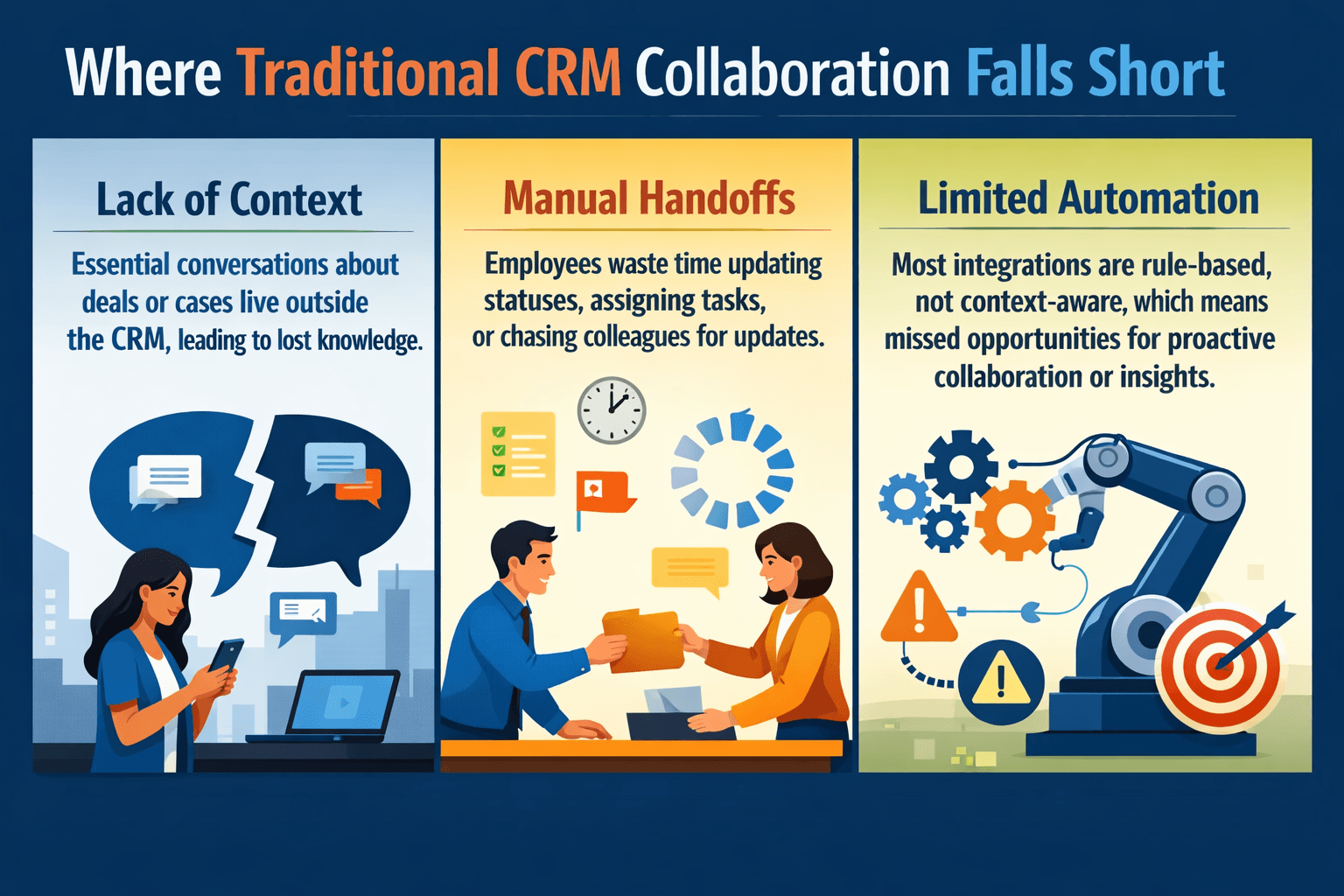
Where Traditional CRM Collaboration Falls Short
- Lack of Context: Essential conversations about deals or cases live outside the CRM, leading to lost knowledge.
- Manual Handoffs: Employees waste time updating statuses, assigning tasks, or chasing colleagues for updates.
- Limited Automation: Most integrations are rule-based, not context-aware, which means missed opportunities for proactive collaboration or insights.
2. Slack’s Agentic OS: A Paradigm Shift for CRM Collaboration
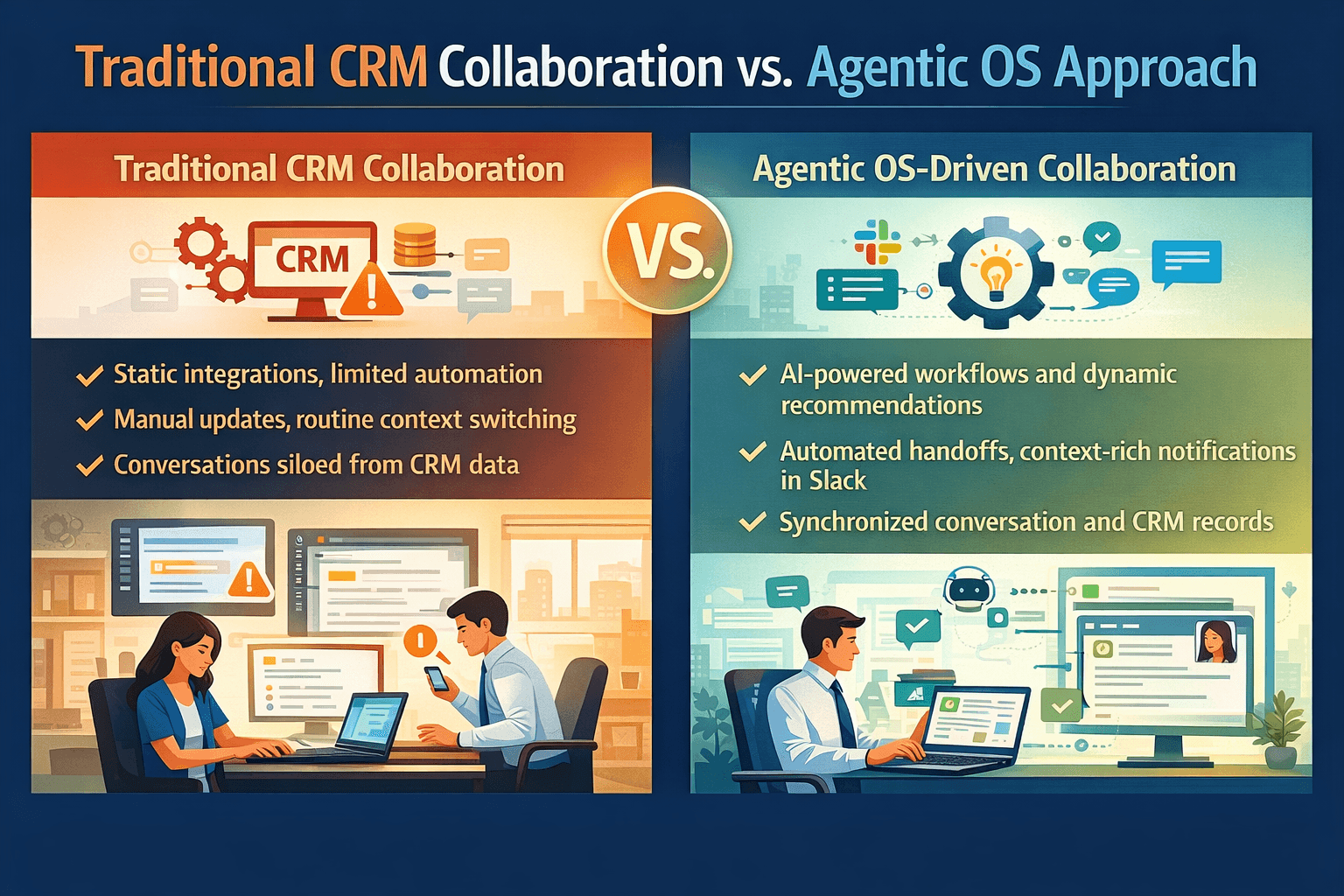
Agentic OS is Slack’s vision for turning workplace collaboration into an intelligent, context-aware, AI-augmented environment. Rather than just acting as a messaging platform or notification hub, Slack is evolving into an orchestration layer for work, transforming how teams interact with Salesforce (and other CRMs) to drive outcomes, not just communicate.
- Agentic Workflows: AI-empowered agents in Slack proactively surface information from Salesforce, summarize cases, recommend next steps, and automate routine actions.
- Contextual Integration: Instead of fragmented notifications, users see a rich, actionable thread of CRM activity right where work happens, in the channel.
- Personal Digital Assistants: Agents learn preferences and working patterns, providing tailored nudges, reminders, and insights to users.
3. How OMI Helps Organizations Benefit from Agentic OS for Salesforce and CRM
Modern CRM strategies require a blend of expert consulting, robust integration, and continuous optimization. At OMI, we deliver Salesforce managed services, AI solutions, and digital transformation guidance tailored to your specific needs. Here’s how we leverage Agentic OS concepts to drive real value:
- Salesforce Integration: We seamlessly connect Salesforce with Slack, ensuring that agents bring critical CRM updates, deals, and cases into the appropriate Slack channels automatically.
- Process Automation & AI Augmentation: Our expertise in marketing automation and business intelligence enables us to build custom workflows that trigger AI-driven agents, streamlining case routing, lead qualification, and more.
- Change Management & Training: We work with your teams to redesign processes, train users on new agentic workflows, and drive real adoption and cultural change.
Implementation Steps: Bringing Agentic OS Collaboration to Life
- Baseline Assessment: Evaluate current CRM usage, identify collaboration pain points, and assess integration readiness.
- Roadmap Design: Map agentic opportunities to key business outcomes such as faster deal closure, improved case resolution times, or enhanced customer experience.
- System Integration: Connect Slack, Salesforce, and if needed, other business apps, while securing data flows and permissions.
- Agent Orchestration: Deploy, configure, and test agentic workflows tailored to specific use cases (e.g., lead handoffs, escalations, approvals).
- Training & Adoption: Equip teams with the skills to maximize these new workflows and measure impact continuously.
Key Benefits for Small to Medium Enterprises
- Lower operational friction in day-to-day CRM tasks
- More responsive customer service with fewer miscommunications
- Proactive decision support through AI-driven insights
- More time spent on value-adding work by reducing manual busywork
4. Enhancing Case Resolution with Slack and Salesforce
Consider a manufacturing company struggling with slow customer case closure due to communication gaps across departments. After OMI integrated Salesforce and Slack using agentic principles, AI agents now route high-priority cases to the right expert, provide real-time context in the relevant Slack channel, and even suggest next steps based on historical data. The result? Teams collaborate in real-time, first-contact resolution rates climb, and management has full visibility into the process through dashboards.
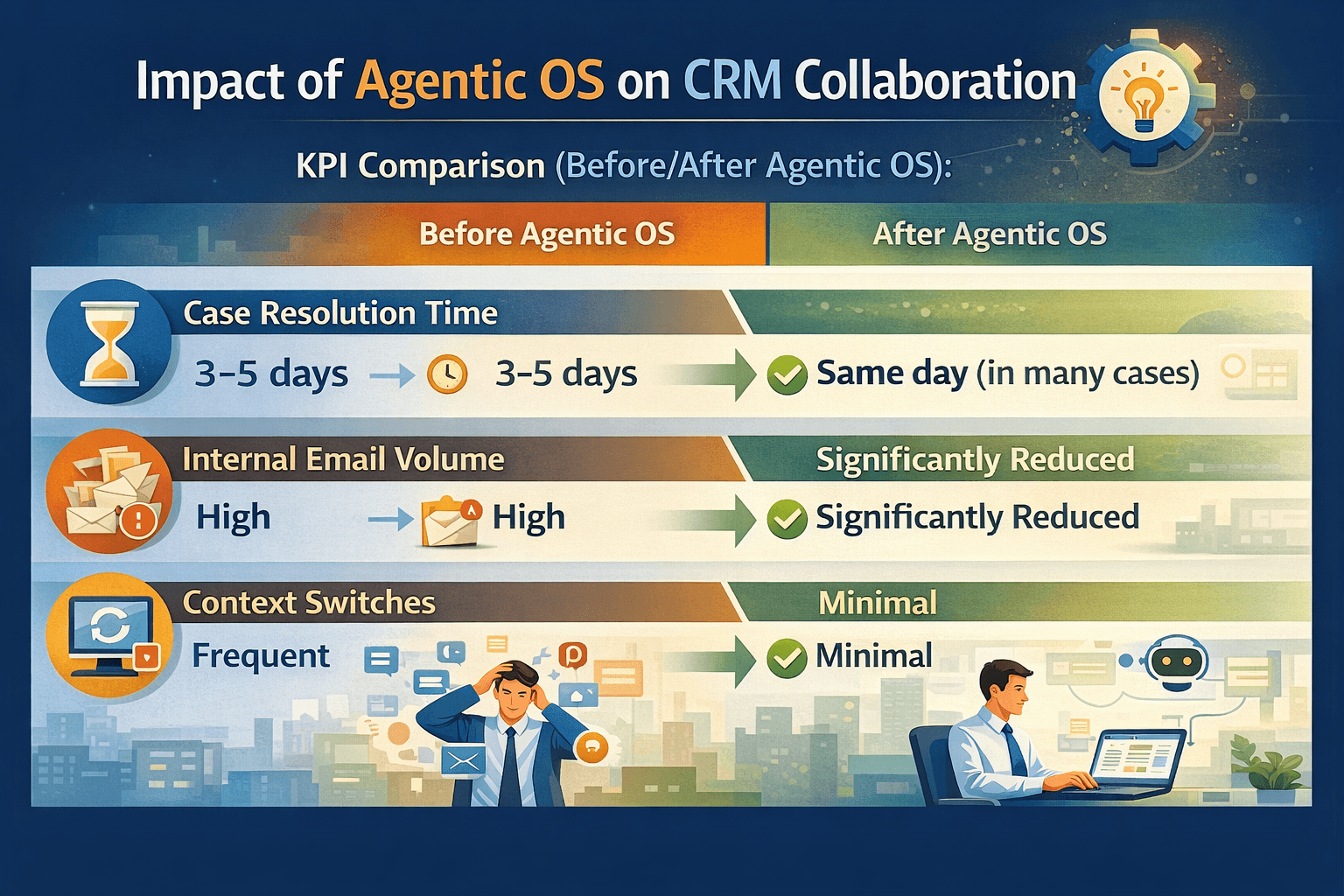
This demonstrates how agentic collaboration can move the needle for real business KPIs, not just user experience.
5. Adopting Agentic Collaboration as a Strategic Imperative
The journey to agentic CRM collaboration is not about simply enabling Slack notifications or basic integrations. It is a holistic, iterative process involving technology, culture, and business alignment. For organizations ready to embrace change, the payoff is significant: a more agile, data-driven enterprise where employees can focus on what matters most, customers.
Best Practices for Lasting Success
- Start with high-impact use cases, think service escalation, sales approvals, or contract cycles, to prove value quickly.
- Measure impact using operational KPIs: reduction in cycle time, increased collaboration touchpoints, user adoption metrics.
- Iterate with feedback from users to refine workflows, expand agentic automation, and drive ongoing optimization.
- Align with trusted partners for managed services, change management, and AI consulting.
Conclusion
Slack’s Agentic OS approach is a game changer for CRM collaboration, enabling companies to break free from legacy communication bottlenecks and unlock a new era of productivity and intelligence. At OMI, we thrive on helping organizations make these innovations work in the real world. If your team is ready to harness the future of CRM optimization and Salesforce integration, let's talk about how we can accelerate your digital transformation journey.
Frequently Asked Questions (FAQs)
- What is an Agentic OS, and how is it changing CRM collaboration?
An Agentic OS is an AI-enabled operational system that uses digital agents to streamline workflows, automate manual tasks, and enhance context-driven collaboration. In CRM, this means teams get the right data and recommended actions at the right time, often within their preferred collaboration tool, such as Slack. Rather than relying on static integrations, companies embrace dynamic workflows that adapt to real contexts, improving customer responsiveness and strategic alignment.
- How does Agentic OS benefit Salesforce administrators?
Salesforce admins can shift their focus from routine maintenance and manual data updates to high-value activities like process design and user enablement. With agentic collaboration, system alerts, reminders, and insights flow directly into Slack, minimizing downtime and maximizing user adoption.
- Is integrating Slack’s Agentic OS approach costly or complex?
With the right managed service partner like OMI, integration complexity is minimized. Assessing your environment, mapping the right workflows, and leveraging best practices can help streamline rollout and avoid common pitfalls.
- Can small to mid-sized businesses take advantage of these solutions?
Absolutely. The Agentic OS model is particularly valuable for SMBs, reducing operational burden, increasing team productivity, and democratizing opportunities to capitalize on AI and automation.
- How can OMI help us implement agentic collaboration in our CRM?
We guide organizations through end-to-end CRM integration, workflow design, agent orchestration, and user adoption. Our expertise in Salesforce, Microsoft Dynamics, marketing automation, and business intelligence ensures your transformation is secure, robust, and tailored to your business goals.
If you're ready to explore how agentic CRM collaboration can unlock growth for your company, connect with OMI today.