How AI Analytics is Changing Post-Implementation Support for Salesforce and Dynamics 365
Blogs

Post-implementation support for Salesforce and Microsoft Dynamics 365 has traditionally demanded considerable time and resources for ongoing monitoring, issue resolution, user training, and system enhancements. As organizations invest heavily in these CRM platforms, small and mid-sized businesses in particular face pressure to extract maximum value from their investment while keeping support costs predictable and manageable. Today, a new force reshapes this landscape: AI-driven analytics. At OMI, we see how artificial intelligence is revolutionizing the way post-implementation activities are delivered, driving far greater efficiency, accuracy, and business impact.
The Post-Implementation Challenge for CRM Platforms
For Salesforce and Dynamics 365 customers, launching a CRM is just the beginning. The journey continues with:
- Ensuring system uptime and performance benchmarks are met
- Responding to user issues and deploying fixes quickly
- Monitoring adoption and engagement to prevent underutilization
- Optimizing business processes as organizational needs evolve
- Maintaining data integrity, compliance, and security
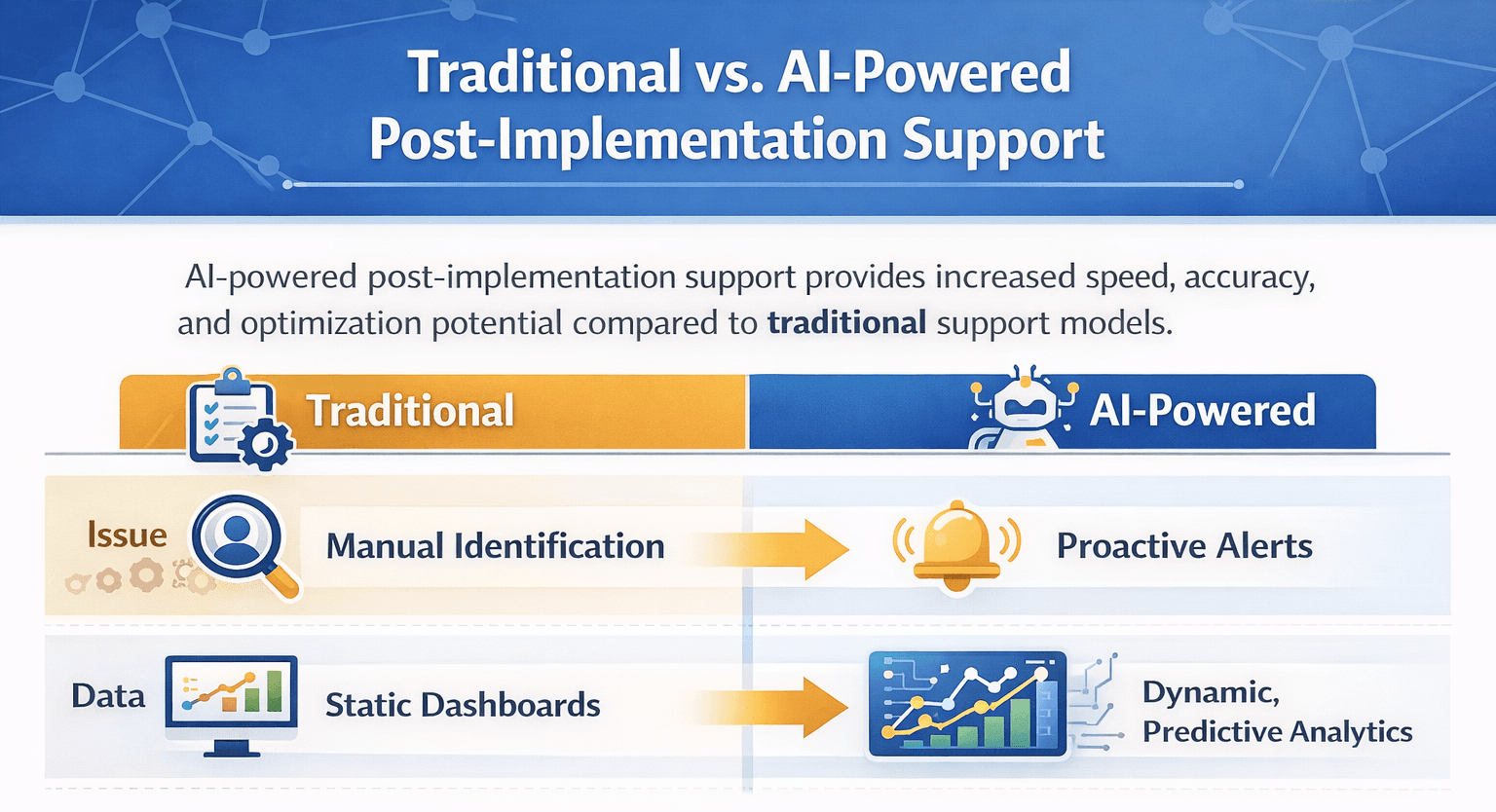
Traditional managed services have sometimes relied too heavily on manual intervention and reactive support. The result? Prolonged resolution times, rising costs, and missed opportunities for optimization. Small to midsize businesses often feel these limitations acutely, lacking the internal bandwidth and deep CRM expertise to respond dynamically to changing needs.
AI Analytics: Addressing Post-Implementation Inefficiencies
Artificial intelligence breaks this reactive cycle by enabling continuous, predictive, and intelligent support. Here’s how:
- Automated Anomaly Detection: AI algorithms continuously scan logs and system activity, flagging issues before they impact users, from unusual login patterns to data sync failures and workflow bottlenecks.
- Predictive Maintenance: Rather than waiting for failures, AI helps forecast when components or integrations may need attention, scheduling preventative actions that reduce downtime.
- User Behavior Insights: By analyzing how end-users interact with Salesforce or Dynamics 365, AI identifies training gaps, process friction points, and underutilized features, supporting targeted coaching or enhancements.
- Personalized Reporting: AI-powered dashboards deliver real-time, role-specific updates for admins, consultants, and executives, enabling data-driven decisions on system health and business impact.
- Root Cause Analysis: AI tools rapidly correlate symptoms across CRM modules, external integrations, and infrastructure, reducing troubleshooting from hours to minutes for complex issues.
How OMI Approaches AI-Driven Support for Salesforce and Dynamics 365
At OMI, we take a pragmatic, outcome-focused approach when integrating AI analytics into CRM managed services. Drawing on decades of CRM and business intelligence experience, our team works closely with clients to:
- Map existing data flows, key performance metrics, and business priorities
- Deploy AI monitoring tools that align with unique Salesforce or Dynamics 365 configurations
- Establish intelligent escalation workflows so critical issues are resolved before operational disruption occurs
- Enable continuous improvement through AI-guided recommendations on process automation, data architecture, and user engagement
For small and medium-sized organizations, this translates into more reliable platforms, empowered users, and better resource allocation, freeing IT teams to focus on strategic initiatives rather than firefighting.
Implementation Best Practices: Unlocking the Value of AI Analytics
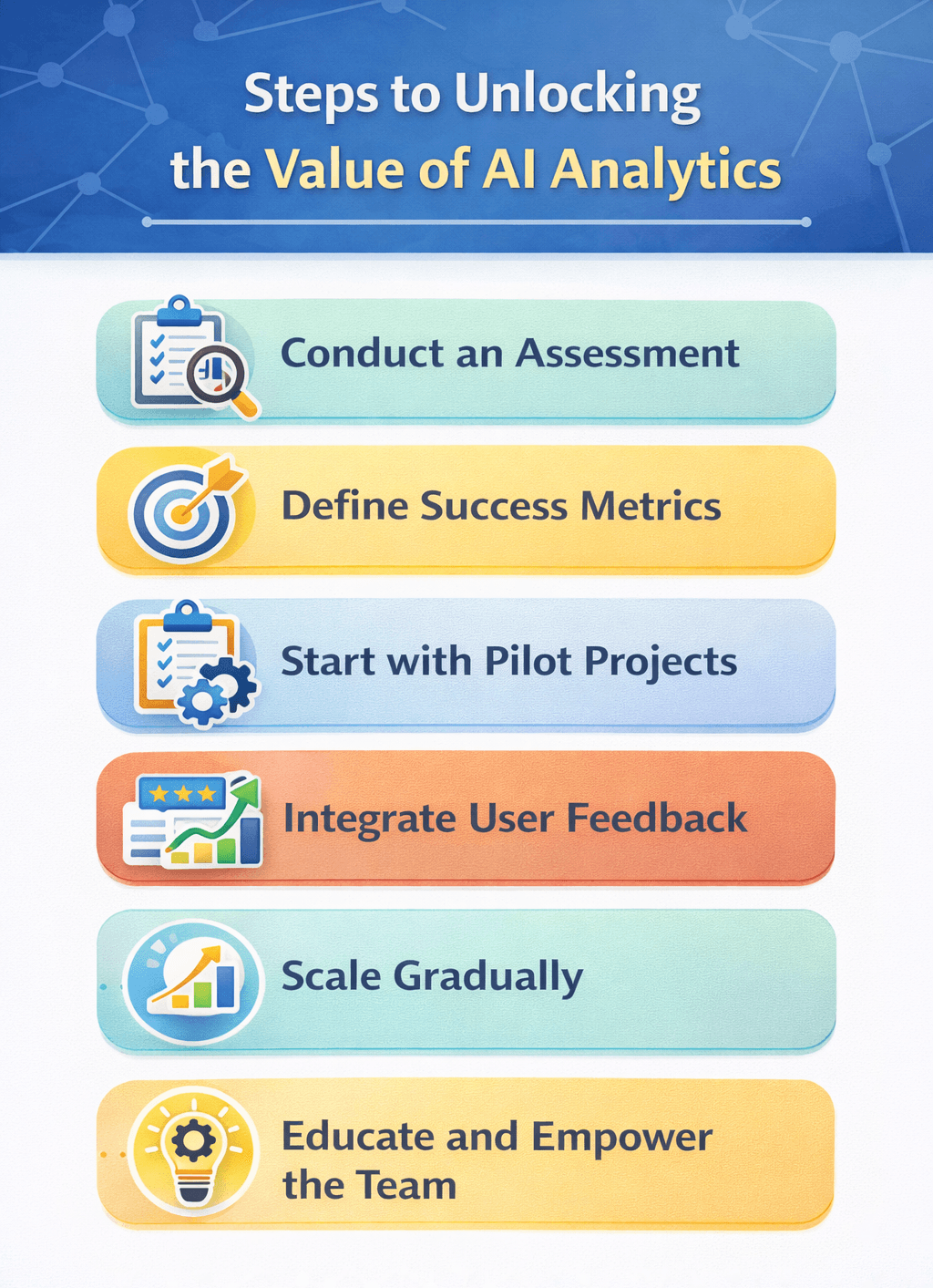
Integrating AI analytics into your CRM support ecosystem requires thoughtful planning and execution. Here are recommended steps based on OMI’s experience:
- Conduct an Assessment: Review your current post-implementation support processes, identifying manual or reactive pain points that could benefit from automation.
- Define Success Metrics: Set clear, measurable goals for system performance, user satisfaction, incident response, and optimization opportunities.
- Start with Pilot Projects: Roll out AI-driven monitoring on a subset of high-priority workflows or integrations, gathering data and adjusting thresholds as needed.
- Integrate User Feedback: Use employee surveys and support ticket analysis alongside AI insights to refine support approaches and training programs.
- Scale Gradually: Expand successful AI analytics use cases to additional departments, processes, or geographies for wider business impact.
- Educate and Empower: Ensure admins and business users understand how AI-generated insights inform decision-making, and foster a culture of continuous improvement.
Real-World Impact: From Reactive to Proactive CRM Management
Our client experiences show that, when done properly, embedding AI analytics into Salesforce or Dynamics 365 support delivers tangible results:
- System health issues are detected earlier, allowing teams to prevent outages
- Support response times decrease as AI quickly categorizes and routes tickets
- User adoption rises due to timely, personalized interventions based on real usage data
- Management has deeper visibility into overall CRM value, supporting smarter roadmap decisions
We consistently observe higher productivity, improved forecast accuracy, and lower total cost of ownership for clients willing to adopt these next-generation tools.
Conclusion
The move from traditional support models to AI-enabled, analytics-driven management is not just an upgrade, it’s a shift in how businesses maintain agility and value in their Salesforce or Dynamics 365 environments. For SMBs aiming to scale or simply do more with less, the adoption of AI analytics is no longer a luxury, but a strategic necessity. At OMI, our goal is to help organizations maximize returns from their CRM investments by leveraging robust, tailored AI-powered support strategies. Ready to explore how AI analytics can transform your managed CRM services? Connect with us at OMI for a consultation on your next steps.
Frequently Asked Questions (FAQs)
- How does AI analytics proactively identify post-implementation issues in CRM systems? AI tools continuously monitor system logs and user activity, using pattern recognition to detect anomalies or warning signs before they escalate. This enables early intervention and minimizes business disruption.
- Is AI-driven post-implementation support suitable for small to medium businesses? Absolutely. In fact, SMBs often benefit the most, as AI reduces manual monitoring and troubleshooting tasks, ensuring better ongoing value from Salesforce or Dynamics 365 investments without stretching IT resources thin.
- How does OMI integrate AI analytics into existing CRM support? We assess current workflows, deploy compatible AI tools, and design smart escalation and reporting structures that align with organizational goals. Our approach ensures seamless integration and user adoption.
- Where can I read more about AI and CRM trends? For broader industry perspectives, visit Salesforce, Microsoft, or explore insights from Deloitte Insights.
If you want to ensure your CRM platform is always optimized, secure, and ready for growth, let us show you the path forward with AI analytics and managed services designed for the future. Learn more about OMI’s approach.