Microsoft Dynamics 365 Customer Service: Building a Scalable CX Strategy
December 08
CRM Configuration
Administration
Blogs

Delivering consistently exceptional customer experiences is no longer a competitive advantage it is a baseline expectation. As organizations embrace digital transformation, the ability to build a scalable and resilient customer service (CX) strategy is more critical than ever. Microsoft Dynamics 365 Customer Service stands at the forefront of this evolution, enabling businesses to meet rising customer expectations, optimize internal workflows, and align with future innovation.
Understanding the Challenge: Scaling CX in a Digital World
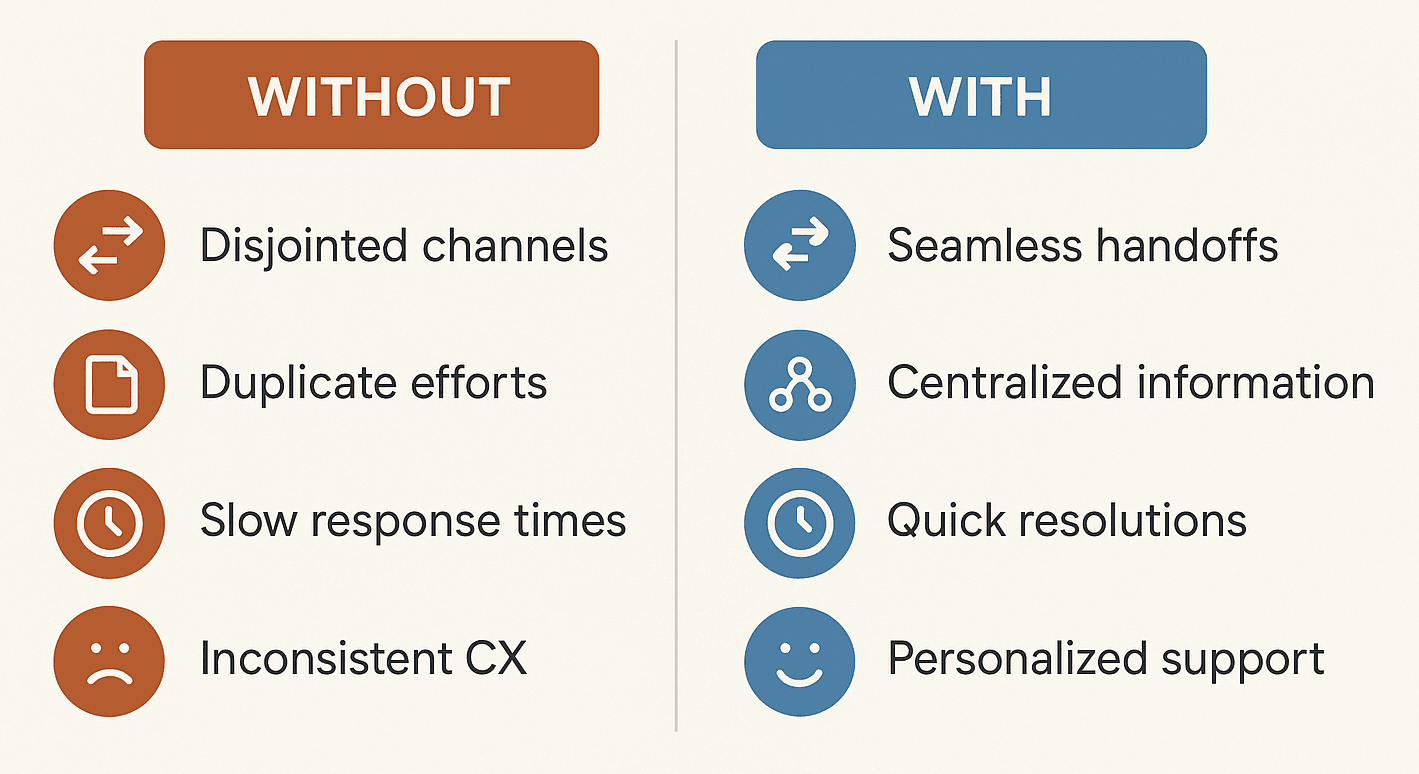
Organizations today face growing pressure from customers who demand instant, personalized, and seamless support across channels. As the complexity of customer interactions grows, so does the challenge of scaling service operations without sacrificing quality.
- Volume and Complexity: Increasing multi-channel touchpoints (chat, email, phone, social) place stress on legacy systems and siloed data.
- Personalization: Customers want service tailored to their history, preferences, and needs.
- Efficiency: Manual processes and disconnected tools hinder agent productivity and delay resolution.
Left unaddressed, these challenges can result in fragmented experiences, inconsistent support, and ultimately, lost customer loyalty and revenue.
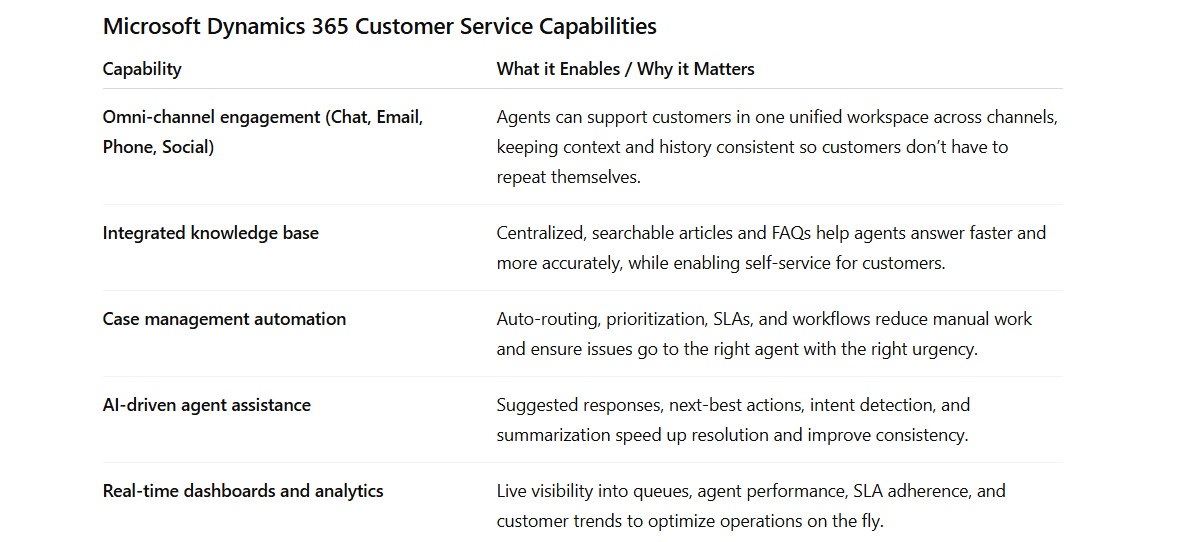
Microsoft Dynamics 365 Customer Service: A Foundation for Scalable CX
Microsoft Dynamics 365 Customer Service provides a unified platform that empowers organizations to scale both service quality and volume. Its cloud-based architecture, integration capabilities, and focus on data-driven customer insights enable companies to build agile and proactive CX strategies.
- Omni-channel Engagement: Connect with customers on their preferred touchpoints and maintain context throughout interactions.
- Unified Agent Experience: Centralize information and streamline workflows so agents can resolve issues faster and more effectively.
- AI-powered Insights: Use intelligent analytics, case suggestions, and sentiment analysis to personalize service and anticipate customer needs. Explore more about AI trends in service on McKinsey Insights: Artificial Intelligence.
- Scalable Cloud Infrastructure: Adapt and expand seamlessly as demand grows, ensuring customer service remains resilient under pressure.
Creating a Scalable CX Strategy: Step-by-Step Approach
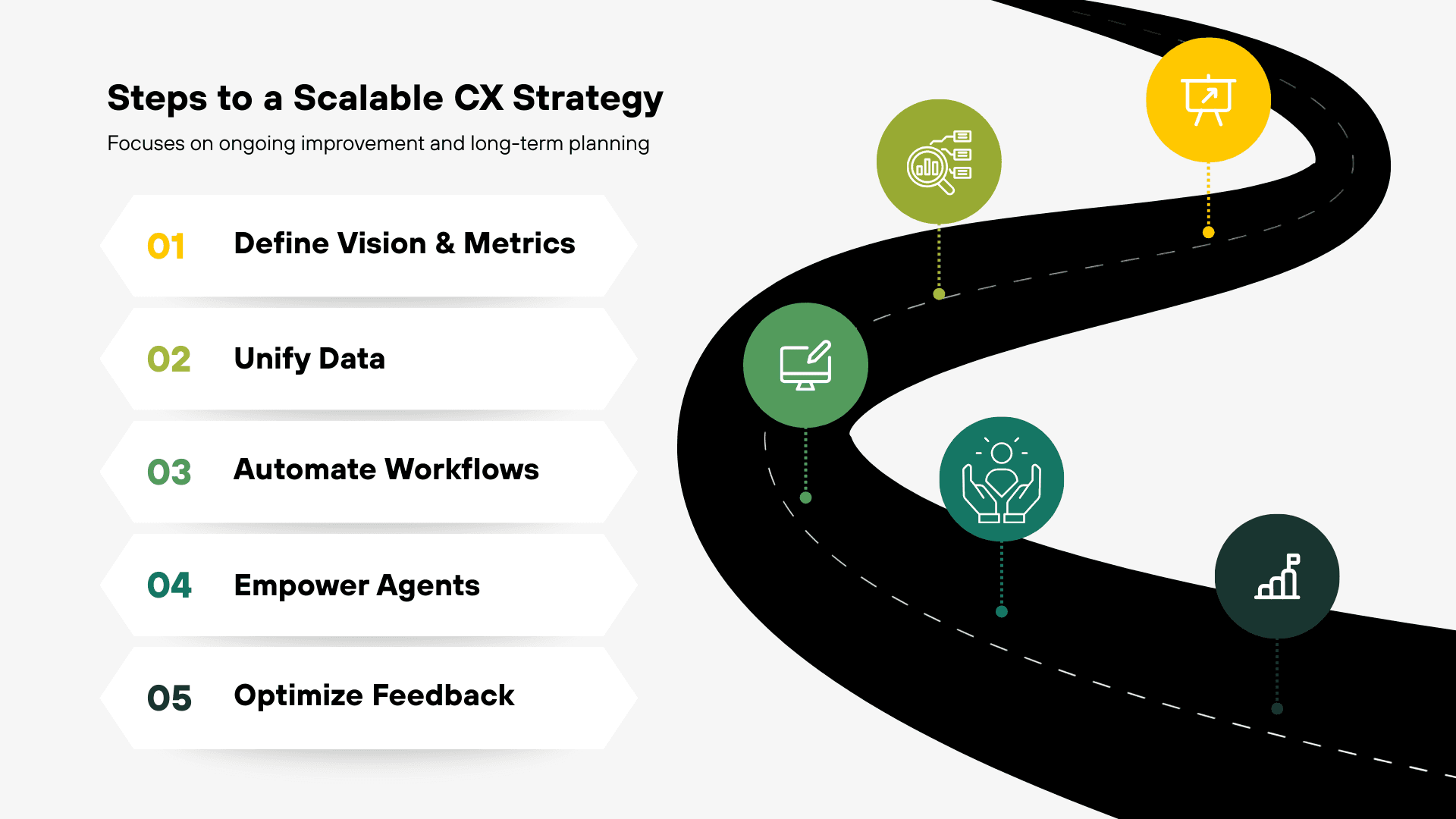
Getting the most from Dynamics 365 Customer Service demands more than simply deploying software. It requires an intentional approach to process design, integration, and continuous optimization.
1. Define Your CX Vision and Metrics
Start by aligning service goals with broader business objectives. What does great customer experience look like for your organization? Which metrics (CSAT, first contact resolution, response times) best reflect your goals?
- Engage stakeholders from support, IT, marketing, and sales to create a unified vision.
- Choose a core set of metrics to guide ongoing improvement.
2. Assess and Unify Data Sources
Break down data silos by centralizing customer interaction histories, knowledge resources, and case data. Dynamics 365 natively integrates with Microsoft platforms and third-party systems, enabling a 360-degree customer view. Unified data also powers personalized, data-driven service interactions at scale.
- Identify key data sources (CRM, ERP, marketing, social feedback) to connect.
- Implement data integration leveraging tools and APIs within the Dynamics 365 ecosystem.
3. Automate and Streamline Core Workflows
Automate routine tasks like case routing, escalation, and status updates. Streamlined processes free up agents for high-value interactions and ensure consistent, timely support.
- Use Dynamics 365 workflow automation for case assignment and SLA management.
- Incorporate knowledge articles and AI assistance to reduce average handling time.
- Explore automation best practices from Microsoft's Guidance.
4. Empower Agents with AI and Knowledge Tools
Equip frontline teams with contextual recommendations, knowledge base search, and real-time analytics. Dynamics 365’s AI-driven features help agents anticipate needs, resolve cases efficiently, and deliver personalized attention.
- Implement AI-powered case suggestions for more informed responses.
- Maintain a dynamic knowledge base, regularly updated with new insights.
5. Optimize Feedback Loops and Reporting
Establish continuous improvement cycles with real-time dashboards, customer feedback mechanisms, and analytics. Track key metrics and adjust processes proactively to address emerging trends and bottlenecks.
- Configure live dashboards for leadership visibility across all support channels.
- Set up closed-loop feedback systems to capture insights and drive future enhancements.
Addressing Change Management and Adoption
Even the best CX technology is only as effective as the people and processes supporting it. To ensure success, invest in change management:
- Onboard agents and supervisors with structured training programs.
- Encourage a culture of continuous learning and adaptation.
- Involve stakeholders in configuration and feedback activities to drive buy-in.
Optimizing for the Future: Adapting with AI and Analytics
The future of CX is predictive and proactive. With business intelligence and AI, organizations can move from reacting to issues to anticipating them. Dynamics 365 enables advanced analytics, empowering leaders to flag emerging issues, identify opportunities, and further personalize service delivery. Read more about the impact of data and AI on the service industry at Atlassian.
- Leverage sentiment analysis to prioritize and personalize responses.
- Analyze interactions to identify training gaps or process inefficiencies.
- Harness predictive insights to forecast demand and staffing needs.
Your Journey with OMI: Why Our Approach Matters
At OMI, we have spent over two decades guiding organizations through complex CRM transformations. Our approach to Microsoft Dynamics 365 Customer Service is deeply consultative. We focus on aligning every deployment with your business goals, integrating systems to maximize efficiency, and building continuous improvement into your CX strategy.
- Proven Expertise: Over 1,000 successful CRM projects with diverse clients across industries
- Full Lifecycle Services: From consulting and design to deployment, integration, and managed services
- Real-World Insights: Practical strategies, not theory, based on first-hand experience with Dynamics 365 and cloud CRM ecosystems
If you are ready to elevate your service strategy, we are here to help. Contact OMI today to learn how our team can guide your Microsoft Dynamics 365 Customer Service journey.
Conclusion: Building CX That Scales Seamlessly
Customer expectations will only continue to rise. The organizations that thrive will be those that combine robust platforms like Microsoft Dynamics 365 Customer Service with a strategy grounded in integration, automation, and continuous learning. By partnering with trusted experts and embracing digital transformation holistically, you can deliver the seamless, scalable customer experiences that set your brand apart.
Want to learn more about digital transformation and managed CRM strategies? Explore our insights at OMI.
Frequently Asked Questions (FAQ)
- What does a scalable CX strategy actually mean?
A scalable customer experience strategy is a structured approach to delivering consistent, high-quality support as volume, channels, and customer expectations grow without sacrificing personalization or efficiency.
- Where should we start when building a CX strategy?
Start by defining your CX vision: what “great service” looks like for your customers and business. Then align around a small set of metrics (CSAT, FCR, response time, SLA performance) to measure progress.
- Why are clear CX metrics so important?
Because scaling without measurement leads to inconsistency. Metrics help teams prioritize what matters most, track improvement over time, and ensure service growth stays aligned with business goals.
- How do we unify customer data to support better CX?
A strong CX strategy brings interaction history, case records, and customer context into one place. Unified data creates a 360-degree view that enables more personalized and faster service across channels.
- What role does automation play in scaling CX?
Automation is key to scale. Routing, escalation, SLA tracking, and updates should be streamlined so agents spend less time on repetitive tasks and more time on high-value customer interactions.
- How do we empower agents as part of a CX strategy?
Give agents easy access to customer context, knowledge articles, and real-time recommendations. When agents have the right tools and guidance, they resolve cases faster and deliver more consistent experiences.
- How can AI strengthen a CX strategy?
AI helps teams shift from reactive to proactive service. It supports smarter prioritization (like sentiment analysis), faster resolution (recommended actions), and stronger personalization at scale.
- What does continuous CX improvement look like?
It means building feedback loops into daily operations: dashboards, customer surveys, case trend analysis, and regular workflow tuning. CX strategy isn’t a one-time project it’s an ongoing cycle.
- How do we ensure adoption and change management stick?
Successful CX strategy includes training, agent involvement in design, leadership visibility through reporting, and a culture of improvement. Adoption is what turns platform capability into real CX outcomes.
- How does Dynamics 365 Customer Service support CX strategy execution?
Dynamics 365 enables the strategy through omnichannel engagement, unified data, workflow automation, AI insights, and scalable cloud infrastructure giving organizations the foundation to evolve and grow CX over time.