The Future of Managed Cloud Services: What Clients Will Demand in 2026
January 19
CRM Configuration
Blogs

The landscape of managed cloud services is evolving rapidly as organizations across all industries accelerate their digital transformation journeys. As we approach 2026, clients' expectations are shifting dramatically, driven by a surge in advanced CRM adoption, artificial intelligence integration, and the need for business agility. At OMI, we’ve seen this transformation firsthand, partnering with businesses to design, implement, and run modern CRM platforms especially Salesforce and Microsoft Dynamics that deliver measurable business outcomes.
Rising Client Expectations: The Next Phase of Managed Cloud Services
Business leaders, Salesforce administrators, and IT decision-makers now expect more than basic cloud maintenance. The future of managed services is about delivering strategic value and seamless innovation. Here's where the shift is heading:
- Outcome-Driven Partnerships: Clients want providers who act as long-term business partners, not just technical maintenance vendors.
- Hyper-Automation and AI: Expectations have moved far beyond traditional automation. Clients demand sophisticated AI-driven solutions that connect, predict, and personalize interactions across every touchpoint.
- Integrated Data Intelligence: Real-time analytics and business intelligence embedded within CRM workflows for actionable insights.
- Agility, Security, and Compliance: Flexible services that scale and adapt to shifting regulations and threats without sacrificing security or user experience.
- Proactive Service Management: Anticipating issues and opportunities, with predictive support rather than reactive troubleshooting.
2026 Managed Cloud Services Demand Hot List:
- End-to-end CRM optimization and modernization
- AI-driven marketing automation and customer journey mapping
- Advanced user training and change management support
- Integration across enterprise cloud, on-premises, and hybrid apps
- Industry-specific compliance and risk management capabilities
Key Challenges: Why Transformation is Not Optional
With the proliferation of cloud-first business models, the stakes are higher. Here’s what’s shaping 2026 client concerns:
- Data Silos: Disparate systems make it hard to unlock a 360-degree view of the customer without effective integration, something we resolve often via Salesforce and Microsoft Dynamics projects.
- Complex Customizations: Many organizations have highly customized CRM systems. Managing upgrades, security patches, and feature rollouts can derail teams unless managed by experts focused on both technology and business process alignment.
- Change Fatigue: Digital transformation can be overwhelming for teams. Companies realize the importance of ongoing user education, onboarding, and managed support to maximize ROI.
- Cost Predictability: Executives demand transparency and outcome-based pricing to align spending directly with business value.
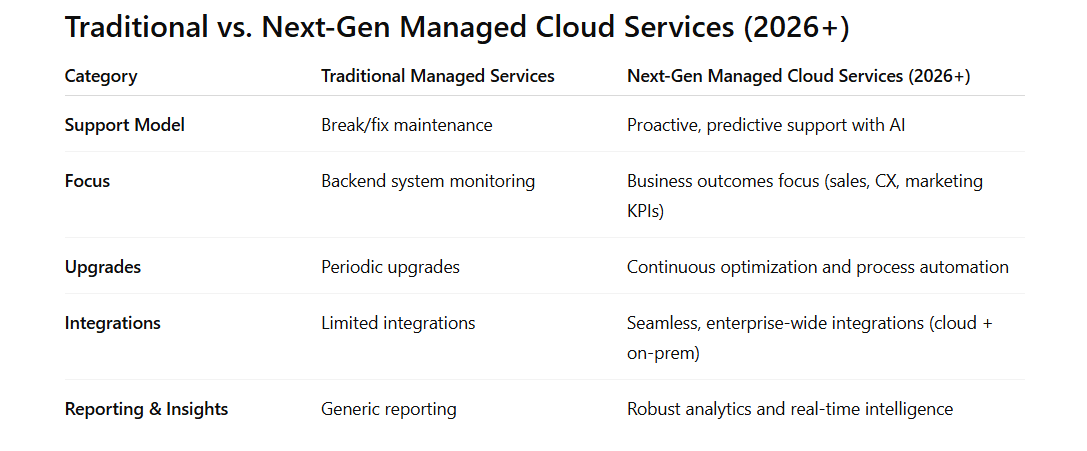
Strategic Solutions: What Clients Will Demand by 2026
Our daily work with diverse organizations reveals clear themes in future requirements. These needs will define the value of managed cloud providers:
- Holistic Integration Expertise: The ability to connect Salesforce, Microsoft Dynamics, AI tools, and data platforms is non-negotiable. Clients seek specialists who ensure a connected experience, across every application and channel, leveraging tools like FlowGear for real-time integrations.
- Personalized, AI-Infused Service: Intelligent case routing, predictive analytics for sales and service, and targeted marketing automations must be standard.
- Industry-Specific Compliance: Managing the complex regulatory environment (healthcare, finance, etc.) through tailored cloud frameworks and ongoing compliance audits will be foundational.
- Continuous Improvement Loops: Managed services should provide a feedback-driven approach, ensuring every workflow is regularly assessed and improved, maximizing efficiency and adoption.
- Clear Change Management Pathways: Success goes beyond deployment, the right partner will deliver training, user adoption campaigns, and adaptable governance as a service.
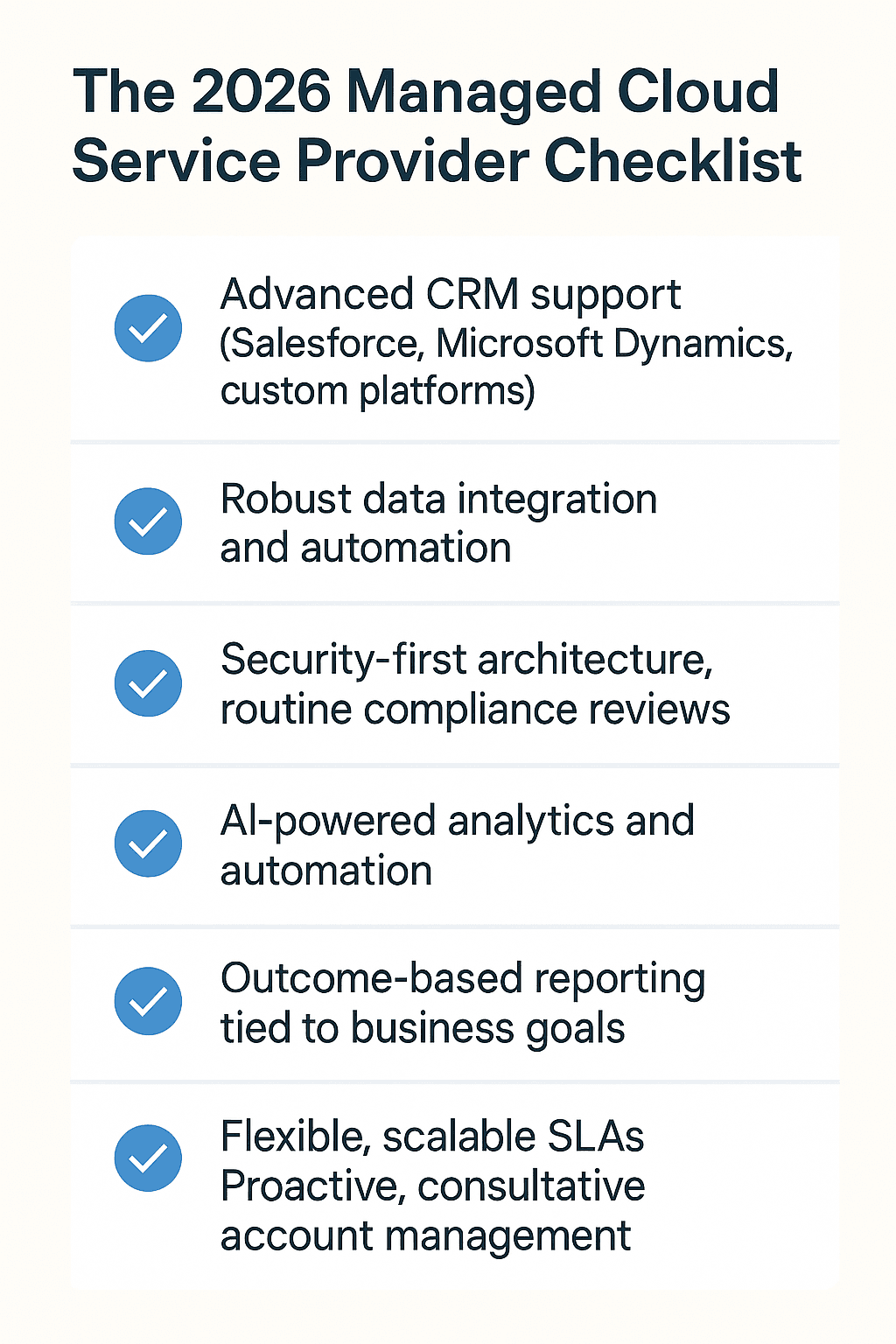
Direct Steps for Implementation: Preparing for the Next Generation
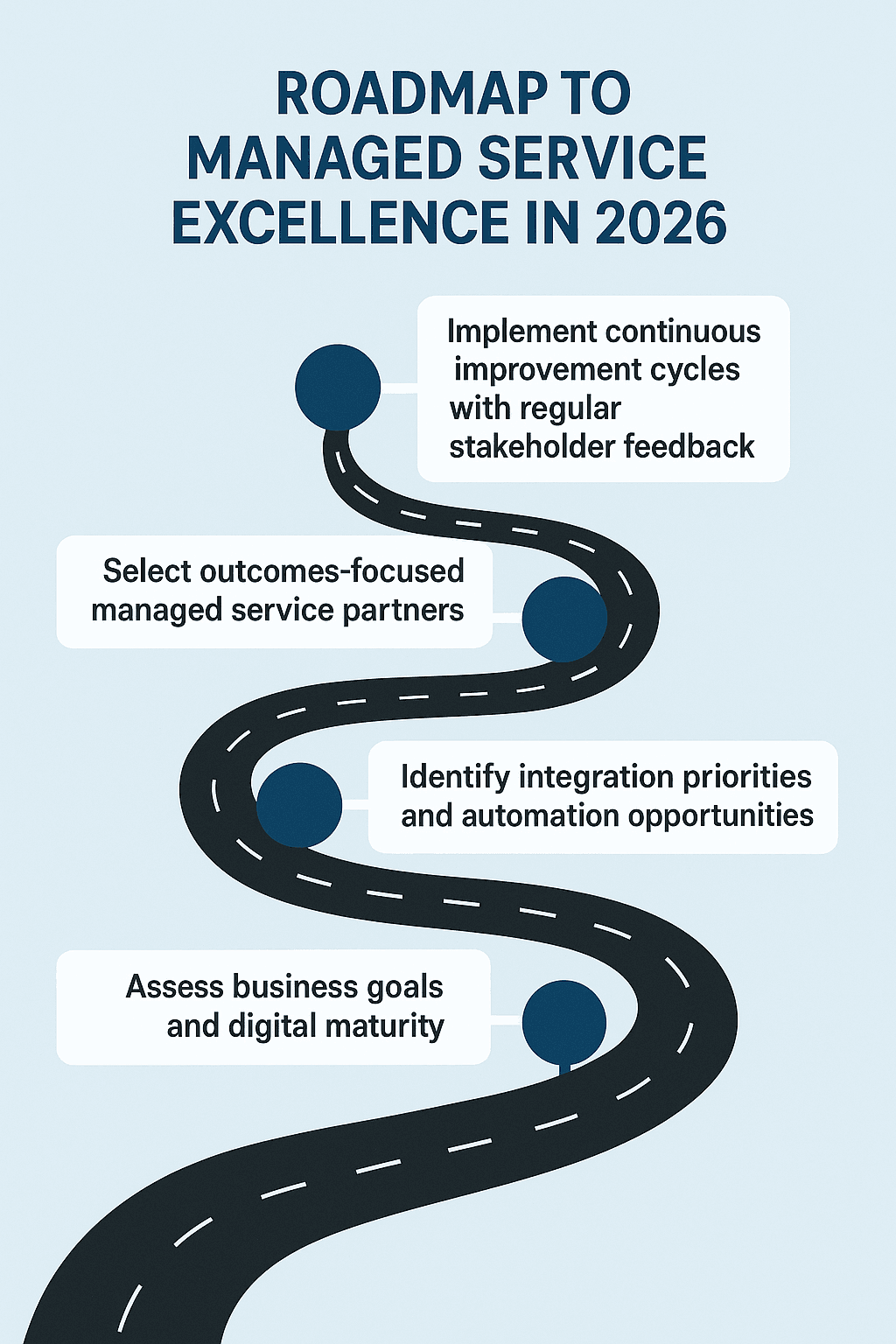
To align with these new expectations, we recommend four practical steps for decision-makers and CRM leaders:
- Assess the Maturity of Your CRM Environment
Review current pain points, integration needs, and business objectives. Use business intelligence tools and user feedback to diagnose gaps. - Prioritize Seamless Integrations
Map all key business systems, ERP, marketing automation, customer service portals, and plan for unified, cloud-first workflows. - Embed AI and Automation Now
Start layering AI-driven insights into sales, marketing, and service processes to build agility and personalize customer engagement as early as possible. - Select Future-Focused Partners
Choose managed cloud service experts (like OMI) with a strong record in Salesforce, Microsoft Dynamics, and AI implementation across industries. Ensure they offer ongoing learning, adoption, and optimization support.
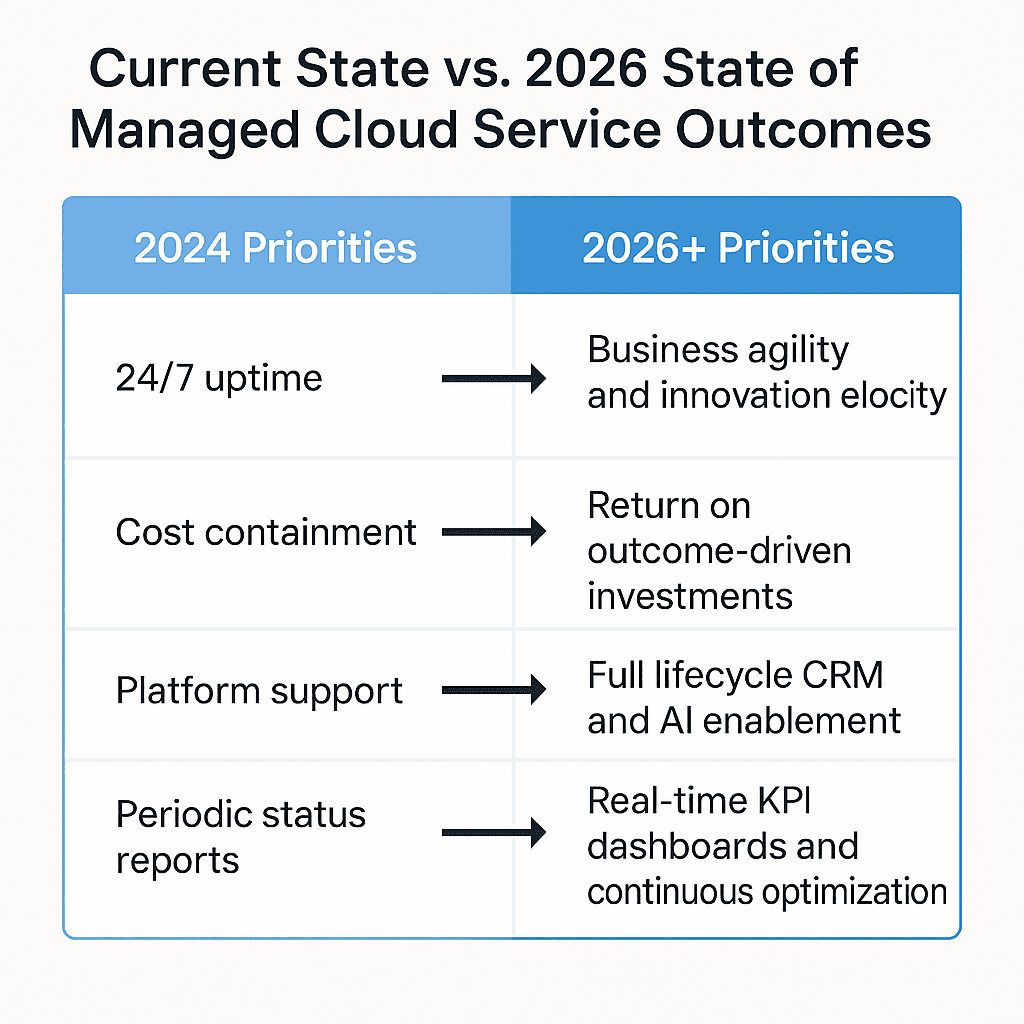
Best Practices for Staying Ahead in the Managed Cloud Era
If you’re preparing your organization for cloud modernization, leverage these proven best practices:
- Embrace Modular, API-First Architectures: Prioritize platforms and partners that support rapid integration and flexible scaling.
- Invest in User-Centric Change Management: Equip your teams for new processes with training programs, clear adoption metrics, and ongoing communication.
- Prioritize Data Governance: Embed privacy, compliance, and security at every layer to build both trust and operational resilience.
- Create a Culture of Continuous Learning: Encourage frequent upskilling and cross-functional workshops to keep pace with evolving technology landscapes.
Conclusion
As we look toward 2026, managed cloud services will redefine what it means to deliver business value. Leaders will need agile, expert partners who bring strategic vision, technical excellence, and a people-first approach to every engagement. At OMI, our mission is to empower our clients to transform their businesses with secure, scalable, and future-ready CRM and AI solutions. If you’re ready to take your CRM ecosystem to the next level, driving growth, intelligence, and resilience let’s connect and write your cloud success story together.
Frequently Asked Questions (FAQ)
- What will managed cloud services look like by 2026?
By 2026, managed cloud services will move far beyond system maintenance. Clients will expect outcome-driven partnerships focused on CRM optimization, AI-powered automation, real-time data intelligence, security, and continuous improvement. Providers will be judged on their ability to deliver measurable business impact, not just technical uptime.
- Why are CRM platforms like Salesforce and Microsoft Dynamics central to this shift?
Salesforce and Microsoft Dynamics sit at the core of customer engagement, sales, marketing, and service operations. As organizations pursue AI-driven personalization and real-time insights, these CRM platforms become the foundation for integrating data, automation, and analytics across the enterprise.
- How does AI change the value of managed cloud services?
AI enables predictive insights, intelligent case routing, automated customer journeys, and proactive service management. Rather than reacting to issues, managed cloud providers can anticipate needs, optimize workflows, and personalize experiences at scale, driving higher ROI from CRM investments.
- What are the biggest challenges organizations face with modern CRM environments?
Common challenges include data silos, complex customizations, change fatigue among users, and lack of cost predictability. Without expert managed services, these issues can limit adoption, slow innovation, and reduce the business value of CRM platforms.
- Why is integration such a critical requirement for future-ready cloud strategies?
Seamless integration connects CRM systems with ERP, marketing automation, analytics platforms, and AI tools. This creates a unified, real-time view of the customer and enables smarter decision-making. API-first and real-time integration approaches are essential for agility and scalability.
- How do managed cloud services support compliance and security?
Future-focused providers embed security, governance, and compliance directly into CRM workflows. This includes industry-specific regulatory support (such as healthcare or financial services), ongoing audits, proactive risk management, and scalable security frameworks that evolve with regulations.
- What should organizations look for in a managed cloud services partner?
Look for a partner with deep expertise in Salesforce and Microsoft Dynamics, proven AI and automation capabilities, strong integration experience, and a commitment to user adoption and continuous optimization. Strategic guidance, transparent pricing, and long-term collaboration are key differentiators.
- How does OMI help organizations prepare for 2026 and beyond?
OMI partners with organizations to design, implement, and manage modern CRM ecosystems that combine cloud, AI, and data intelligence. Our approach focuses on measurable outcomes, seamless integrations, continuous improvement, and empowering teams through training and change management.